

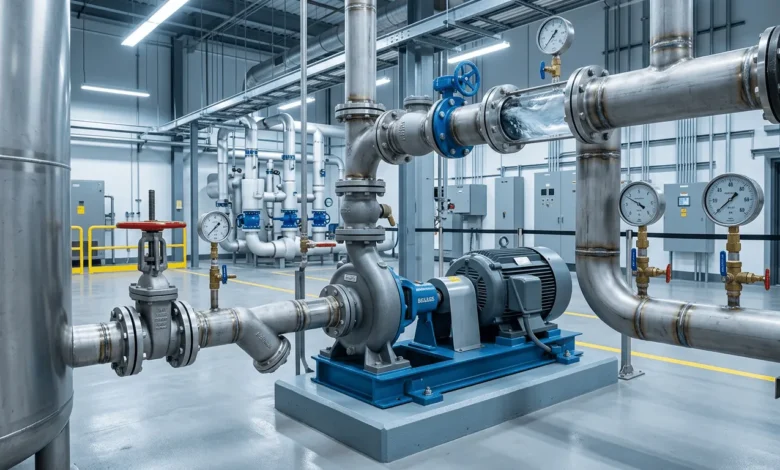
Industrial operations often rely on precise and reliable fluid transfer systems to maintain efficiency and consistency. Among the many technologies used for this purpose, progressing cavity pumps stand out for their ability to handle complex fluids with ease. Known for their versatility and steady flow characteristics, these pumps have become essential in a wide range of industries.
This article explores what progressing cavity pumps are, how they work, and why they are so widely used in industrial applications. It also highlights the advantages, key components, and practical use cases that make this technology indispensable.
Understanding Progressing Cavity Pumps
Progressing cavity pumps are a type of positive displacement pump designed to move fluids through a sequence of small, fixed shape cavities. These cavities progress from the suction side to the discharge side as the pump operates, carrying fluid smoothly and consistently.
A PC pump is especially effective in handling viscous, abrasive, or shear sensitive materials. Unlike centrifugal pumps that rely on velocity and pressure changes, progressing cavity pumps move fluid in a controlled and continuous manner. This makes them ideal for applications where maintaining fluid integrity is critical.
The defining characteristic of progressing cavity pumps is their ability to deliver a constant flow rate regardless of pressure variations. This feature ensures reliability in processes where precision is essential.
Core Components of a PC Pump
To understand how a PC pump works, it is important to examine its primary components. Each part plays a crucial role in ensuring efficient operation.
The rotor is a helical metal component that rotates within the stator. It is typically made from hardened steel to withstand wear and tear.
The stator is a rubber or elastomer component with a double helix shape. It forms sealed cavities when paired with the rotor.
The drive shaft connects the motor to the rotor and transmits rotational motion.
The suction and discharge ports allow fluid to enter and exit the pump.
The sealing system prevents leakage and ensures safe operation, especially in high pressure environments.
The interaction between the rotor and stator is what creates the unique pumping action of progressing cavity pumps.
How Progressing Cavity Pumps Work
The working principle of progressing cavity pumps is both simple and highly effective. When the rotor rotates inside the stator, a series of cavities is formed between the two components. These cavities move along the length of the pump, carrying fluid from the inlet to the outlet.
As the rotor turns, new cavities are continuously created at the suction end while existing ones move toward the discharge end. This movement ensures a steady and non pulsating flow of fluid.
One of the most significant advantages of this mechanism is its ability to handle a wide range of fluid types. From thick slurries to delicate emulsions, a PC pump can transport materials without causing damage or separation.
Because the flow rate is directly proportional to the rotational speed, operators can easily control the output by adjusting the motor speed. This level of control is highly valuable in industrial processes that require precision.
Key Advantages of Progressing Cavity Pumps
Progressing cavity pumps offer several benefits that make them a preferred choice in many industries.
One major advantage is their ability to handle high viscosity fluids. Unlike other pump types that struggle with thick materials, these pumps maintain efficiency even when dealing with heavy substances.
Another benefit is their gentle pumping action. This makes them suitable for shear sensitive fluids that can be damaged by aggressive handling.
They also provide a consistent flow rate, which is essential for processes that require accuracy and stability.
Progressing cavity pumps are capable of handling solids and abrasive materials without significant wear when properly maintained.
Additionally, their self priming capability allows them to operate effectively even when the suction line is not fully filled with fluid.
These advantages make the PC pump a reliable solution for challenging fluid handling tasks.
Industrial Applications of PC Pumps
The versatility of progressing cavity pumps allows them to be used across a wide range of industries. Their ability to handle different types of fluids makes them suitable for both simple and complex applications.
In the wastewater treatment industry, progressing cavity pumps are used to transfer sludge and other semi solid materials. Their ability to handle high solid content without clogging is a key advantage.
In the food and beverage sector, these pumps are used to move products such as sauces, syrups, and dairy items. The gentle pumping action helps preserve the quality and texture of the products.
The oil and gas industry relies on PC pumps for transferring crude oil, drilling mud, and other viscous fluids. Their durability and efficiency make them ideal for demanding environments.
In the chemical industry, progressing cavity pumps are used to handle corrosive and hazardous materials. Their controlled flow ensures safe and precise handling.
They are also widely used in mining operations for transporting slurry and other abrasive materials.
These diverse applications demonstrate the adaptability and reliability of progressing cavity pumps in industrial settings.
Factors Influencing Performance
Several factors can affect the performance of a PC pump. Understanding these factors is essential for optimizing efficiency and extending the lifespan of the equipment.
The type of fluid being pumped plays a significant role. Viscosity, temperature, and solid content can all impact performance.
The material of the stator must be compatible with the fluid to prevent damage and ensure proper sealing.
Operating speed also affects efficiency. Running the pump at the correct speed helps maintain optimal performance and reduces wear.
Proper installation and alignment are critical for smooth operation. Misalignment can lead to premature failure of components.
Regular maintenance is another important factor. Inspecting and replacing worn parts can prevent costly downtime.
By addressing these factors, operators can ensure that progressing cavity pumps perform reliably over time.
Maintenance and Longevity
Maintaining a PC pump is relatively straightforward, but it requires attention to detail. Regular inspection of the rotor and stator is essential to detect signs of wear.
Lubrication of moving parts helps reduce friction and extend the life of the pump.
Monitoring operating conditions such as temperature and pressure can help identify potential issues early.
Cleaning the pump after handling certain materials can prevent buildup and maintain efficiency.
Replacing worn components in a timely manner ensures that the pump continues to operate at peak performance.
With proper maintenance, progressing cavity pumps can provide long service life and consistent results.
Comparing Progressing Cavity Pumps with Other Pump Types
While there are many types of pumps available, progressing cavity pumps offer unique advantages that set them apart.
Unlike centrifugal pumps, which rely on high speed rotation and pressure changes, PC pumps provide a steady and controlled flow.
Compared to diaphragm pumps, progressing cavity pumps offer smoother operation and better handling of high viscosity fluids.
Gear pumps are effective for certain applications, but they may struggle with abrasive or solid laden fluids. In contrast, progressing cavity pumps are designed to handle such materials with ease.
These differences highlight why the PC pump is often chosen for specialized applications where other pump types may fall short.
Future Trends in Progressing Cavity Pump Technology
As industries continue to evolve, the demand for efficient and reliable fluid handling solutions is increasing. Progressing cavity pumps are also advancing to meet these demands.
Modern designs are focusing on improved materials that enhance durability and resistance to wear.
Automation and smart monitoring systems are being integrated to provide real time performance data and predictive maintenance capabilities.
Energy efficiency is another area of development, with new designs aimed at reducing power consumption without compromising performance.
These advancements are ensuring that progressing cavity pumps remain relevant and valuable in the future of industrial operations.
Progressing cavity pumps play a vital role in modern industrial processes. Their unique design and operating principle allow them to handle a wide range of fluids with precision and reliability.
From wastewater treatment to food processing and oil and gas operations, the PC pump has proven its effectiveness in diverse applications. Its ability to deliver consistent flow, handle challenging materials, and maintain fluid integrity makes it a preferred choice for many industries.
By understanding how progressing cavity pumps work and how to maintain them properly, businesses can maximize efficiency and ensure long term performance. As technology continues to advance, these pumps will remain an essential component of industrial fluid handling systems.


